Formula Electric
Team Member
View CAD model →
I built a custom radiator test bench that measures heat rejection under controlled coolant flow and airflow conditions, using the data to support a 30% radiator downsize without losing thermal margin. Empirical testing was the only way to do this confidently, since manufacturer specs hadn't matched the real world performance we were seeing on the car. The smaller radiator saved weight and freed up packaging space inside the sidepods.
Radiator Test Bench
The custom test bench measures heat rejection capacity under controlled conditions. Heated coolant is circulated through the radiator at known flow rates while temperature sensors log inlet and outlet conditions. Airflow across the radiator core is controlled via a variable speed fan, simulating vehicle speed. This produces heat rejection curves as a function of coolant flow, air velocity, and temperature differential.
Testing revealed the previous radiator was significantly oversized for actual heat loads. Data supported moving to a 30% smaller radiator, saving weight and allowing tighter packaging within the sidepods.
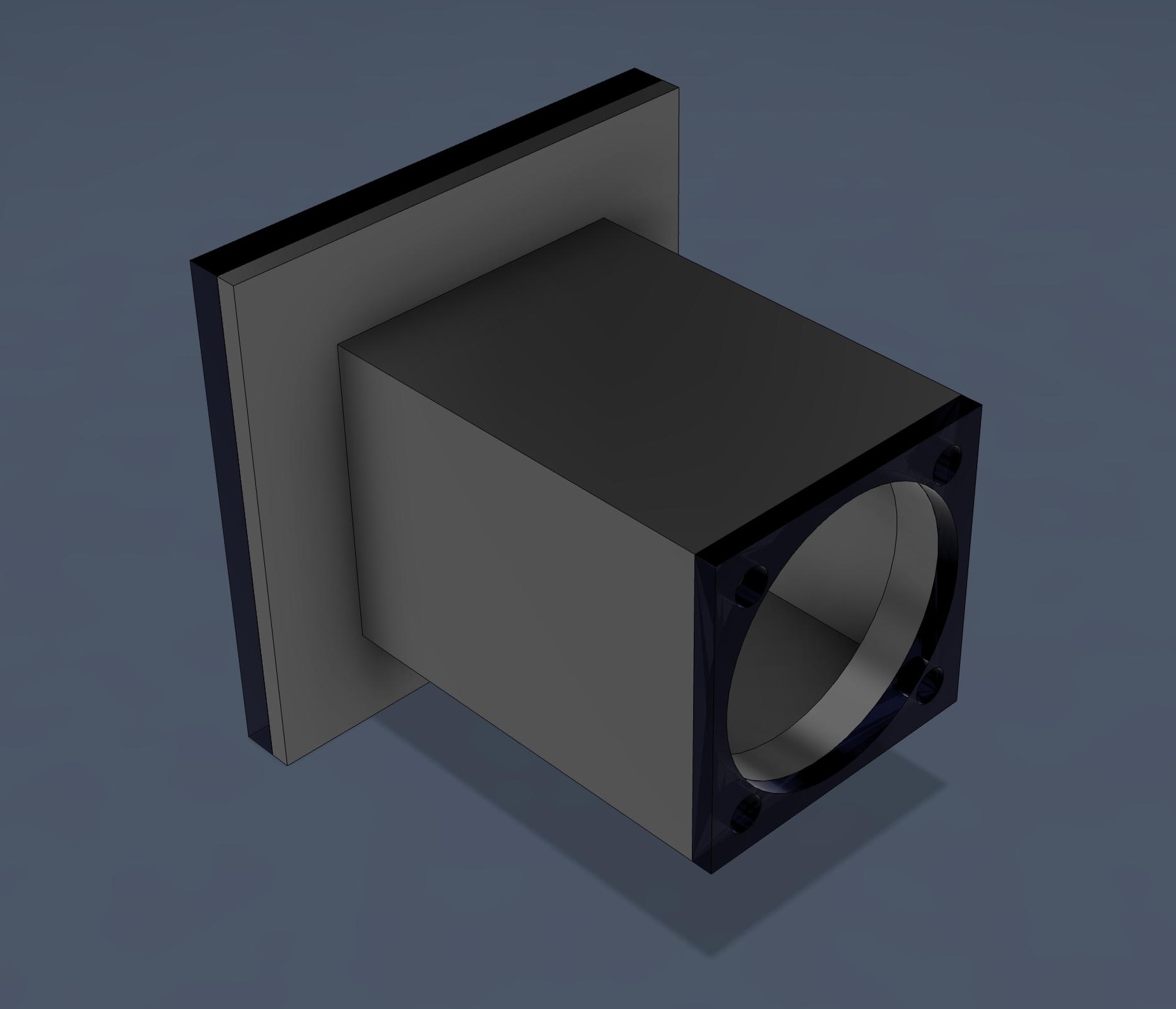
In the orientation below, the radiator would be attached to the back of the test bench, with coolant running through it, and the fan would be attached to the mounting points at the front of the setup. The blue parts of the CAD represent foam, and we added duct tape to ensure a proper seal around the system.
Electric Water Pump
Mechanical water pumps are driven off the engine, meaning at idle they spin slowly and move minimal coolant, which had caused temperature spikes during extended idle periods. When we noticed this happening, I thought of adding an electric pump since it decouples coolant flow from engine speed, maintaining circulation regardless of RPM.
Adding the electric water pump eliminated the idle temperature spikes and simplified the cooling system by removing the mechanical pump drive. Power draw is minimal relative to the alternator capacity.