Tennis Ball Pickup/Feeder
Tennis Captain
View CAD model →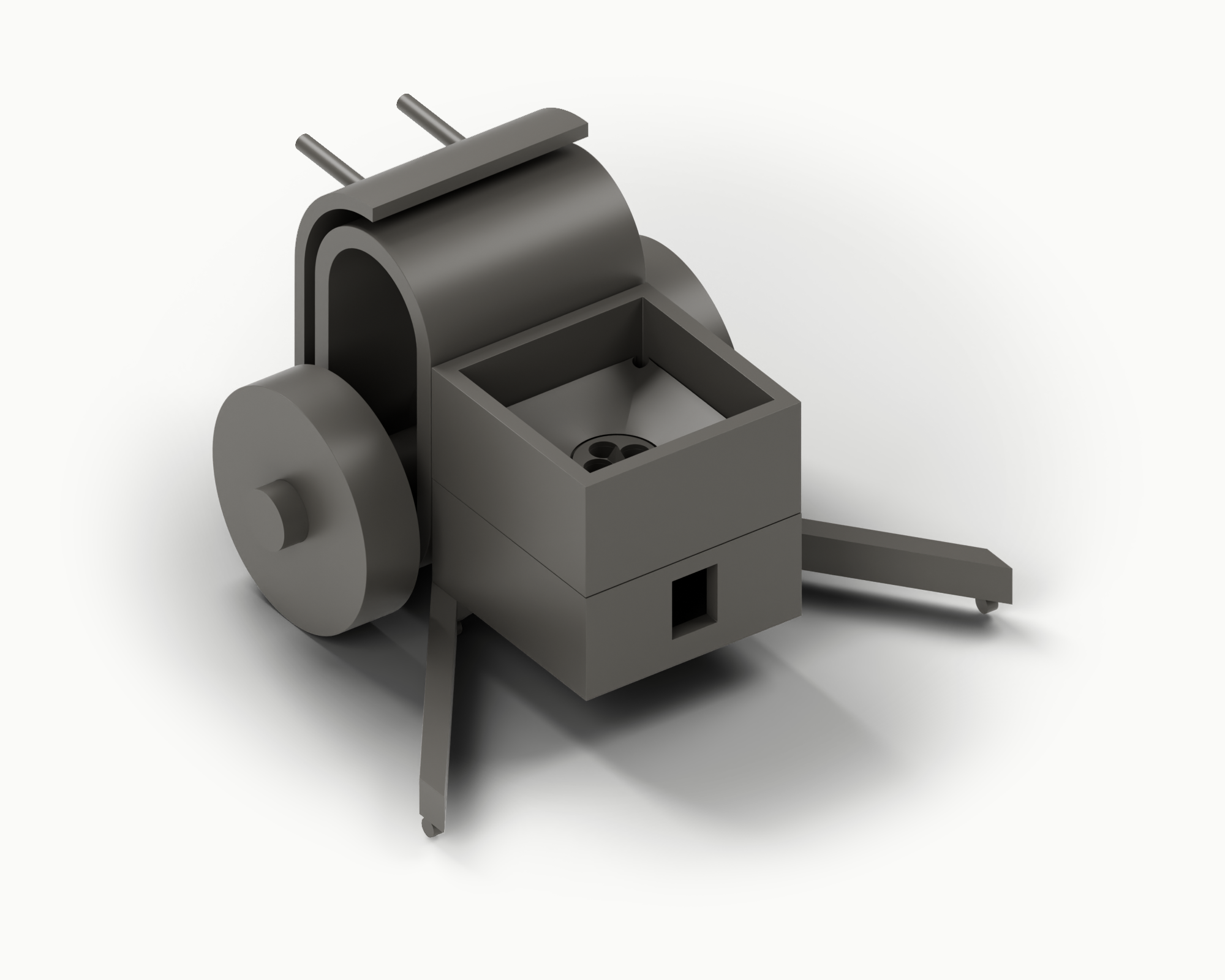
I designed and built a dual function ball machine that picks up tennis balls when pushed across the court and feeds them back during drills, combining two commercial products into one unit at about a quarter of the cost. The design problem was making pickup robust on a real court surface; my first concept used a divot drum that jammed on misaligned balls, so I switched to the compression drum approach commercial mowers use. The rest was packaging, fitting a counter rotating wheel feeder and a 350 ball hopper onto a repurposed team cart that became the rolling frame.
The Problem
Every practice, the team spent roughly 20 minutes picking up balls by hand. Without a ball machine, feeding drills meant someone standing courtside tossing balls instead of practicing. Commercial ball mowers run around $850 and ball machines start around $1,000, so buying both wasn't realistic on a high school budget. The goal was a single machine that does both: picks up balls when pushed across the court and feeds them back at adjustable speeds during drills. Total materials came to about $300, using a repurposed team cart as the rolling frame.
Pickup Mechanism
The first concept used a drum with divots cut into it, so balls would nestle into cups and get carried up into the hopper. It didn't take long to see the problems: balls that didn't seat cleanly would jam or get pushed aside, and the spacing meant only one ball per rotation at each position. The mechanism was too sensitive to alignment to work on a real court.
The final design uses the same approach as commercial ball mowers: compressing balls between a fixed rear wall and a rotating drum at the front. As the cart moves forward, the drum spins and squeezes balls up and over into the hopper. The compression grip doesn't depend on precise positioning, which makes it much more forgiving. Having spent a lot of time around ball mowers through tennis, the mechanism was familiar enough to design from experience.
Ball Feeder
The ejection mechanism uses counter rotating wheels that grip and launch balls at adjustable intervals. A 3D printed funnel channels balls from the 350 ball hopper down to a central feed slot; the funnel had to be split into sections due to printer bed size limits.
The hopper is a repurposed team cart from the school's tennis equipment, with spot welded sheet metal panels for weather resistance. Reusing the cart saved cost and provided a proven rolling frame rather than fabricating one from scratch.
Reflection
To improve this further, I would add a web interface so the machine can be controlled by a phone from across the court. Traditionally, you have to walk back to the ball machine to adjust speed, launch angle, spin, and feed interval, and a remote is only for power on or off. Ideally a coach could program an entire drill sequence ahead of time and let the machine run through it on its own.